
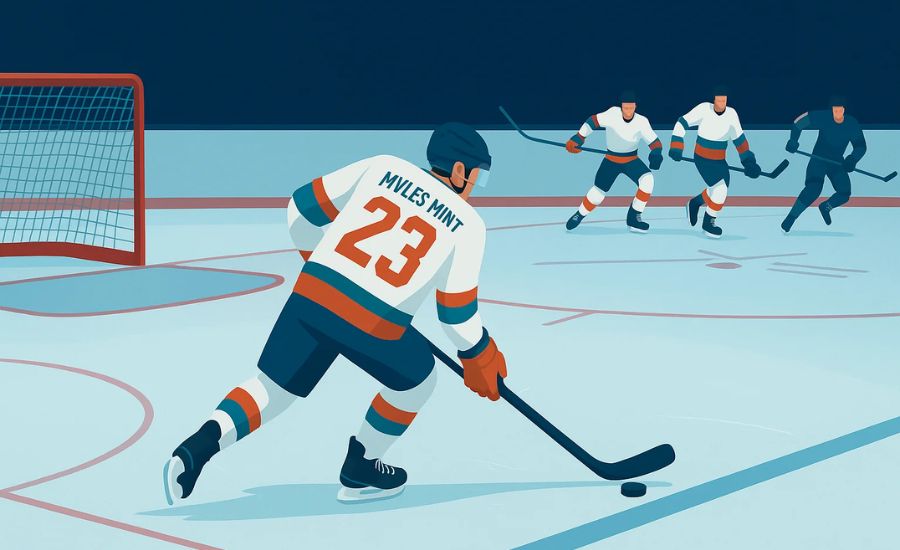
Few graduation choices in hockey create as much stress as a goalie pulls in the final moments of a game. It’s a pass made of stress, timing and pure chance. The phrase “Miles Mint pulls the goalie” has gained traction because it represents much more than an easy sports activity strategy. For many fans, it symbolizes fierce selection, confidence under pressure and a willingness to take risks when the outcome is uncertain.
When Miles Mint chose to remove the goalkeeper, the atmosphere inside the arena changed immediately. The crowd reacted with a mixture of joy and excitement as the crew pushed forward with an extra striker on the ice. Every second suddenly carried more depth. Although the strategy expanded the probability of success, the fact that the trap was fully exposed made each decision interesting and dangerous.
Among hockey supporters and sports operations analysts, the surge was memorable because it affirmed fearless leadership. Instead of gambling correctly, Miles Mint chose an aggressive approach at a critical juncture. That decision reflected confidence, strategic concerns and a willingness to make conventional expectations in pursuit of victory.
Over time, the phrase “Miles Mint pulls goalie” began to symbolize something other than hockey. It is associated with taking calculated threats in lifestyle, business, protest and leadership. Now, people use the expression to describe moments when someone steps out of their comfort zone and wants out loud rather than being uncertain.
The impact of the moment also sparked conversations in the modern approach to hockey. Coaches and industry are increasingly looking for places where competing past picks can shift gears. The goalkeeper’s draw was not good and proved to be a decisive final test. In many cases, a carefully analyzed method designed to maximize the chances of scoring a sequence of overstressed moments is considered.
Miles Mint’s choice is memorable because it flawlessly captured the emotional aspect of the game. It confirmed how courage, instinct and approach can come en masse in a moment when radicals are talking long after the game is over.
What Does “Pulling the Goalie” Mean?
In hockey, the goalie plays the most important role in the organization. Their responsibility no. 1 is to stabilize the internet and protect yourself against your opponent’s language requirements. Because they act as a shield barrier, goalkeepers are generally uniquely influential in the final outcomes of the business.
But there are situations where coaches decide to take a goalie off the ice, usually in the final minutes of a close game. In this process, the goalkeeper is replaced with one more competitor. The attacker causes a wave of hysteria and creates opportunities for additional motivation when the organization immediately wants a target.
While this approach can also lead to gambling or growth gains, it additionally comes with a dangerous risk. Without a goalkeeper inside the work, the internet is unprotected, giving the opponent a clear opportunity for a clear goal from distance. Because of this balance between admiration and menace, baiting a goalie is considered one of the boldest tactical decisions in hockey.
Why Do Coaches Use This Strategy?
No. 1 goaltending teams pull goalkeeper for is an increase of goal opportunities in important moments of the game. Often this method is used when a team is trailing through a goal and the simplest little time left on the clock. Putting a goalie on the ice in those situations may not provide enough offensive stress to trade results.
Replacing the goalie with more runners gives the team an extra offensive player. This creates more passing opportunities, more powerful % control, and added pressure within the offensive zone. Coaches hope the numerical advantage will result in little planning before time runs out.
Often teams use this strategy in situations e.g.
Past regrets within 1/3 period
The need for an equalization goal to push time beyond regulation
Trying to make the very last attacking push before the end of the game
Although the method can be effective, it also poses a primary danger. The insecurity of the Internet is likely to easily extend to the resistance group if they benefit from ownership by one percent. For that reason, the lure of a goalie is largely considered an over-threat, high-profile option.
In many ways, turnover is akin to taking a mathematical gamble. A crew can expose themselves defensively, yet competitiveness can be the best viable threat to stay away from defeat and completely change the momentum of the game.
Risks of the Empty Net
The goalie position is considered one of the most competitive stress smart strategies in hockey. Once the goalie is off the ice, the crew gains an added offensive advantage while still keeping the net open. This creates a risky situation where even a small mistake can quickly end the opponent’s goal.
With an empty net, it would be extremely recognizable to protect his players. They will carefully vary the consistency of % offensive pressure, knowing that even a temporary loss of power can get backed up almost anywhere on the ice. The error can be very small, especially in the first two seconds of a close joke.
The depth of the picture affects coaches, athletes and amateurs alike. With the movement of the zone mixing often promotes happiness with fear. Every skip, shot, or turnover feels extra important because the final outcomes of the game can be traded instantly.
This mix of urgency, menace, and unpredictability makes the allure of a goalie such a dramatic element in hockey. It makes the last moments of the game a very tense battle, where strategies, confidence and calm are tested to the highest degree.
The History of Pulling the Goalie
The strategy of luring a goalie has been part of hockey for many years. Coaches began using tactics knowing that Sudo offered a better threat to change the final results of the game than simply conceding defeat .
Historical facts show that there were groups using versions of this strategy as early as the 1940s. Over time, especially at some level of tight video games in the final minutes, it has only progressed to an expansive portion of expert hockey modes.
As the game improved, coaches began using the approach more aggressively. Instead of being ready at the last minute, some groups have started running the goalie by closing out several minutes of regulation time to create longer intervals of offensive tension Modern analytics and game strategy have also led coaches to decide when and how to flow.
The story of the goalkeeper is full of dramatic moments. The fans witnessed unforgettable comeback victories, with the extra striker helping assess a significant late plan. At the same time, the strategy additionally suffered annoying losses when fighters took advantage of the empty internet. It’s this match between risk and reward that always makes the mode one of the most exciting choices in all of hockey.
Carving Out a Cultural Metaphor
Over time, the obsession with goalkeeping became more than a hockey predisposition. Now ambitious is widely seen as a symbol of priority, willpower and willingness to take on risks with enormous amounts at stake. When humans say approximately “coin miles to attract a goalkeeper” they are generally associated with not particular athletic approach but also a mentality created goal courage and ambition.
In hockey, keeping a goalie away is synonymous with uncertainty, danger brought within the whole. The same concept is strongly associated with real entities. Many pivotal moments require people to leave comfort and safety to pursue greater potential, even if the outcome is unknown.
This concept is seen in many areas outside of sports games. Entrepreneurs take subsequent risk by abandoning a business venture without guaranteeing its overall performance. Artists and makers are stepping into the public scene by sharing their images with neighbors. Leaders make tough decisions under pressure knowing that failure is fashionable but speed is essential.
The metaphor remains effective because it shows the constant truth that progress often requires a calculated threat. Playing with precision can set you up even if you face momentary failures, but hard moves are time and time again the easiest path to meaningful success as in hockey, achievement often involves people who tend to stay true to their party, become uncertain, make terrible mistakes when the players are maxed out.
Myles Mint and the Phrase Explained
“Myles Mint Pulls the Goalie” has ended up as a familiar expression in sports-entertainment discourse, lineup discussions, and even broader motivational contexts and even though the call itself may be symbolic or fanciful in some activities, the meaning behind the phrase has to do with strong overambition.
Luring a goalie in hockey is already considered one of the riskiest methods for any recreationist. Linking that transition to “Miles Mint” gives a sense of confidence, drama, and fearless timing. This word is regularly used to describe situations where a person chooses to take a comfortable risk that sticks to a safe or predictable pace.
What makes the phrase memorable means deeper in the surface of the play. It represents the concept of moving forward regardless of uncertainty and taking risks to pursue more inspiration. Choosing comfort or reason in preference shows ambition, willpower, and the ability to endure to the fullest.
So “Miles Mint the pulse goalie” is an evolution past the hockey context. It now serves as a metaphor for moments on the path of life when men discover heroic momentum, discover the truth of their careers, and surrender entirely to the uncertainty of the ultimate final outcome.
Famous Pull the Goalie Moments
Several dramatic moments from goalies pulled into hockey records were unforgettable for fans and analysts. These situations often show the convergence of risk, method, and last-minute choices that make the game so exciting.
The most famous example occurred in 1979, when coach Roger Nielsen made the terrible choice to let his goalie pass in entertaining the contest for the New York Islanders The controversial pass helped spark a fantastic comeback and confirmed how one tactical wish can completely change the momentum of a strength.
Another memorable second got through the Stanley Cup Final right here in 2004, while Tampa Bay Lightning graduate John Tortorella chose to drag the goalie through a crucial stretch of the game. The gamble paid off when the group scored late and changed gears in dramatic style, helped by a thriller.
They also provide unforgettable examples of international hockey. At the 2018 Winter Olympics, Canada’s women’s hockey team used the technique in an embarrassingly healthy game against the United States. The selections each thought of confidence and urgency, which showed how top groups are willing to embody tensions in the pursuit of victory.
These moments remain important in hockey history because they capture the emotional intensity of the game. Luring goalkeepers is never a surefire solution, however, playing it out can create a sequence of the most dramatic and memorable finishes in the game.
Rewards of Pulling the Goalie
While luring a goalie is risky, its potential benefits largely explain why coaches tend to use it in crucial moments.
One of the principal advantages is the extended risk of scoring. By bringing an extra offensive player on the ice, groups can strive for more excitement within the offensive quarter and create greater passing and catching opportunities This can often lead to a critical missed goal that ties up the game and the reinforcements beyond the regular season.
Another significant advantage is the change of pace. When a team draws a goalkeeper and rates well, it often gives players energy and intensifies the stress on the opposing team. The sudden agreement in place can completely change the last minutes of the fun.
This strategy also produced some of the most unforgettable moments in hockey records. The last 2d rounds done with empty intranets are often remembered for years, due to the anxiety and joy of their origins. Fans and analysts alike consider those performances to be a number of the most dramatic highlights of the game.
Because of their lucrative salaries, coaches keep their faith in the process despite its dangers. When finished at the right time, it may well float an effective comeback opportunity near a loss to entice a goalie.
Why Fans Love (and Fear) the Move
Fans no longer have many terrible feelings, especially within the very last moments near hockey growth, when Seth threatens to pull the goalkeeper. Panorama creates a very special combination of joy and enjoyment, hard to get right in many video games.
Otherwise, the election will unleash a wave of hysteria. Without the front of the ice, the defense, and the goalie in the net, every skip, shot, rebound extra is too much. Fans are eager to come along with the ride and come to the realization that a stroke of success can immediately go on to the ultimate impact of entertainment. This creates an environment full of pests and problems.
At the same time, the feeling of anxiety can be strong. An empty net leaves no room for error, or a small mistake can result in the opponent getting a net. It rather affected the crowd with fans through birthday celebrations because they fear how quickly the situation will slide if their business enterprise is up to it.
It is this set of volatility and uncertainty that makes the goalie’s fascination so appealing. The emotional highs and lows of these moments are a huge part of why hockey is so compelling, a huge part of why lovers find hilarious dramatic victories or replay heartbreaking endings.
Lessons Beyond Hockey
The concept behind “attracting a goalkeeper” has gradually moved past hockey and is now often used as a rough picture of life. It represents moments when people choose action over prudence, especially when the final outcomes are uncertain, but potential praise is important.
Many real life situations often require stepping out of the comfort zone for fulfillment. While safe gambling may reduce opportunity, it does not create sustained growth or open up new opportunities. Growth often comes from choices with uncertainty, one must be confident in one’s decision.
This idea can be found in areas such as business activities, career choices, relationships, and personal improvement. People have to make terrible choices from time to time, even if failure is an option, in order to move forward or find a worthwhile deal.
In this case, the words “Miles Mint pulls the goalie” symbolically reflect courage and decisive action. It highlights the concept that calculated risk-taking is critical to growth in many ways, and that growth usually comes from moments where people tend to behave despite uncertainty .
Facts:
- In hockey, the goalie is the main defensive player responsible for protecting the net and preventing goals.
- Coaches may “pull the goalie” in late-game situations by replacing the goalie with an extra attacker.
- This strategy increases offensive pressure but leaves the net empty and highly vulnerable.
- The move is usually used when a team is trailing by a goal and needs to score quickly.
- It is considered a high-risk, high-reward tactic in professional hockey.
- The concept has been used in hockey for decades and became more common from the mid-20th century onward.
- Modern coaching decisions are increasingly influenced by analytics, game context, and probability of scoring.
- The phrase “Myles Mint pulls the goalie” is used symbolically to describe bold, risk-taking decisions beyond sports.
Summary:
“Pulling the goalie” is one of hockey’s most dramatic strategies, used when a team urgently needs a goal late in a game. By removing the goalie and adding an extra attacker, teams gain more offensive power but risk leaving their net exposed. This creates intense, fast-paced moments where one mistake can decide the outcome.
The phrase “Myles Mint pulls the goalie” is often used as a modern metaphor for bold decision-making under pressure. It represents situations where individuals choose risk over safety in pursuit of a better outcome. Over time, this idea has expanded beyond hockey and is now used to describe courage, strategy, and high-stakes choices in real life.
FAQs:
1. What does “pulling the goalie” mean in hockey?
It is when a coach removes the goalie and adds an extra attacker to increase the chances of scoring.
2. Why do teams pull the goalie?
Teams usually do it when they are losing near the end of a game and need a quick goal to tie or win.
3. Is pulling the goalie risky?
Yes. It improves scoring chances but leaves the net empty, making it easier for the opponent to score.
4. When did this strategy start being used?
It has been used for many decades, becoming more common in professional hockey during the mid-1900s.
5. What does “Myles Mint pulls the goalie” mean?
It is a symbolic phrase used to describe bold, high-risk decisions made under pressure.
6. Do modern teams still use this strategy?
Yes. It is still a standard late-game tactic in professional hockey today.
7. Can pulling the goalie backfire?
Yes. If the opposing team gains possession, they can easily score an empty-net goal.
8. Why is this strategy so famous?
Because it creates some of the most intense, unpredictable, and memorable moments in hockey.
Explore more about the latest Updates at Slight Wave.