
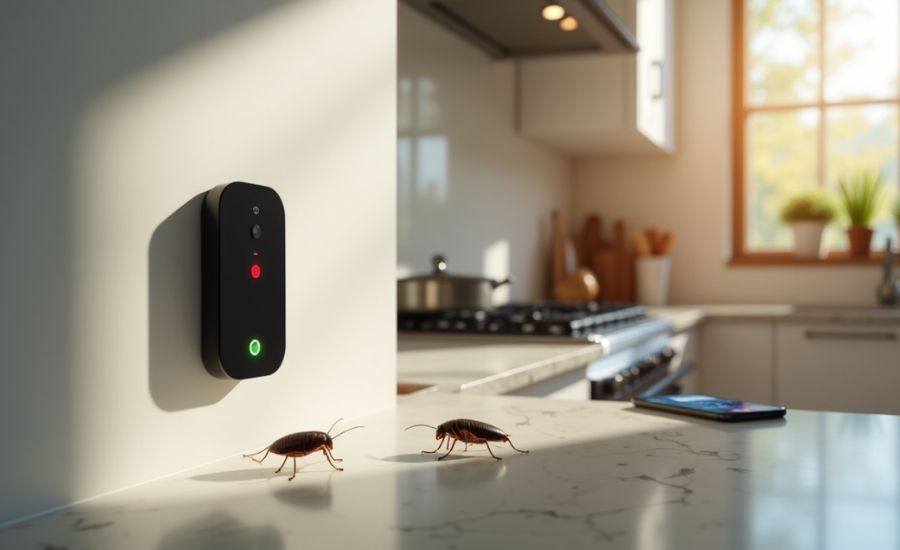
Pest infestations rarely start with a dramatic warning sign, they begin quietly, often long before a homeowner ever thinks to call a rat exterminator. As smart home technology becomes more advanced, it’s changing how pests are detected and managed by catching early activity, environmental changes, and hidden problem areas before infestations take hold.
How Smart Home Pest Control Improves Pest Detection and Prevention
Smart home pest control shifts pest management from reactive to preventive. Instead of discovering a problem after you see droppings or damage, smart systems focus on early signals, movement, moisture changes, temperature shifts, and unusual activity patterns that pests rely on to survive. This approach relies heavily on modern pest detection technology to surface issues before they escalate.
Think of smart pest detection as environmental awareness. Rodents, insects, and termites leave subtle clues long before an infestation is obvious or before a homeowner realizes they may need a bed bug exterminator. Smart pest control devices continuously monitor those conditions, alerting homeowners when something changes, like elevated humidity behind a wall or nighttime motion where no human activity should exist.
By identifying abnormal changes early, smart home pest control helps homeowners respond before pests establish nesting or breeding sites. The real value isn’t replacing pest control, it’s shortening the time between “first pest activity” and “first response.” That gap is where infestations explode.
Smart Pest Control Devices for Early Pest Detection
The most effective smart pest control devices fall into a few categories: motion sensors designed for small, low-level movement (rodents in attics, crawl spaces, or wall voids), smart traps that notify you when triggered instead of sitting unnoticed, environmental sensors that track humidity and temperature, key indicators for termites, cockroaches, and mold-attracting pests, helping homeowners act early before calling a termite exterminator.
What sets these tools apart from traditional traps is context. You’re not just catching a pest, you’re understanding when, where, and why activity is happening. Each device contributes a different signal. Movement suggests activity, environmental changes suggest favorable conditions, and smart traps confirm presence. Used together, these smart pest control devices create a clearer picture through layered pest detection technology rather than isolated alerts.
How a Pest Monitoring System Works in Smart Homes
A pest monitoring system acts like a background observer of your home’s less-visible spaces. Sensors collect data continuously, then send it to a central hub or app that looks for abnormal patterns. Movement at consistent nighttime hours in a sealed attic, rising moisture levels near a foundation wall, or repeated trap activations in a single zone can trigger alerts, often before physical signs are visible.
Some systems also log activity over time, helping identify whether you’re dealing with a single intruder or a growing colony. The key difference with a pest monitoring system is trend tracking, not one-off alerts. By establishing a baseline of normal conditions within specific areas of the home, such as attics, basements, garages, or crawl spaces, smart home pest control systems can flag deviations and allow homeowners to investigate targeted areas rather than relying on routine checks or visible damage.
Preventing Infestations With Smart Home Pest Control
Prevention happens when you intervene before pests establish nesting, breeding, or food access. Smart home pest control helps prevent infestations by identifying early activity and the conditions that allow pests to thrive, such as warmth, moisture, darkness, early movement patterns, and repeated activity in the same area that can signal entry points.
Detecting movement before nesting occurs or moisture before colonies form allows homeowners to intervene with sealing, drying, sanitation, or targeted treatment. Instead of spraying blindly or waiting for visible damage, homeowners can take surgical, low-impact actions informed by pest detection technology, fixing the exact problem pests are exploiting.
Early action reduces pest survival rates and limits reproduction. That’s how small issues stay small.
How Pest Control Providers Use Technology For Better Outcomes
Professional pest control companies increasingly rely on pest detection technology to work smarter, not harder. Remote monitoring traps, sensor data, activity logs, and digital inspection tools help identify infestation hotspots, track trends over time, and adjust treatment timing and placement.
This data-driven approach allows providers to focus treatments precisely where pests are active, not where they might be. The result is fewer chemicals, faster resolution, and better long-term control. Data from a pest monitoring system helps technicians determine the severity of infestations, improve follow-up planning, and reduce unnecessary chemical use.
Technology doesn’t replace expertise, it amplifies it. It enhances decision-making rather than replacing professional expertise.
Pests Best Detected Using Pest Detection Technology
Smart pest detection works best for pests that move regularly, create environmental changes, and follow predictable patterns. These include rodents (mice, rats), cockroaches, termites, ant colonies, stored-product pests, and moisture-driven insects like silverfish.
Pest detection technology is most effective for pests that move predictably and depend on stable environmental conditions. Pests that rely on moisture, warmth, or consistent food sources are particularly well-suited to detection through environmental and motion-based monitoring used in smart home pest control systems.
Flying insects are harder to monitor digitally, but even they can be indirectly detected through environmental shifts and camera monitoring in problem zones.
Integrating Smart Pest Control Devices With Smart Home Systems
Integration is where smart pest control devices become strategic. When pest sensors connect with HVAC systems, lighting systems, security cameras, and smart alerts and routines, your home actively works against pests instead of passively allowing conditions to develop.
This integration turns pest prevention into a system, not a set of disconnected tools. A connected pest monitoring system allows pest-related alerts to trigger complementary responses within the home, reducing response time and helping maintain conditions that are less attractive to pests while improving overall prevention effectiveness.
Limits of Smart Home Pest Control and When to Call Professionals
Smart home pest control has limits, and knowing them matters. Smart systems detect conditions and activity but do not eliminate pests or repair structural vulnerabilities. They cannot physically remove nests or colonies, detect every deep structural infestation, seal entry points, or apply treatments, and alerts from pest detection technology can be misleading without expert interpretation.
Smart systems tell you when and where to act. Professionals decide how. Professional help is still essential when infestations persist despite alerts, structural damage is suspected, health risks are present, or pests such as termites or aggressive rodents are involved.
Is a Pest Monitoring System Worth It for Pest Prevention
Yes, when used as a layer, not a replacement. A pest monitoring system is valuable for long-term prevention because it enables early detection and informed response. By reducing delays between initial activity and intervention, homeowners can limit damage, lower treatment costs, minimize chemical use, protect structural integrity, and maintain healthier indoor conditions.
The smartest homes don’t wait for pests to announce themselves. With smart home pest control supported by modern pest detection technology, problems are detected quietly, and handled early. When combined with routine maintenance and professional support, smart pest control devices provide lasting protection rather than reactive control.