
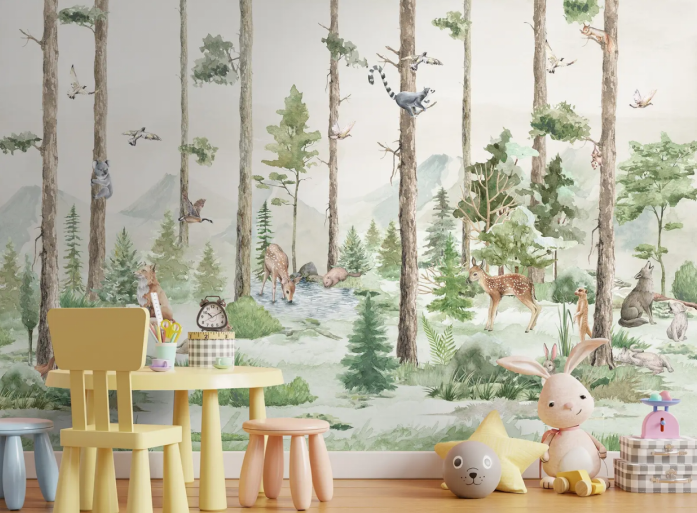
Kids’ spaces may be designed to be cute and attractive, but they have to work hard to create a sleep space, a play space, a learning space, all while being able to survive the inevitable messes and rumpus that descend. It’s easiest if the walls can set a calm atmospheric tone, as all patterns and colors on the walls set the emotional resonance for the space.
If you want a simple upgrade with a big impact, kids wallpaper can refresh the space without changing furniture. This guide covers age-appropriate themes, 2026 design directions, safety checks, and practical tips you can use right away.
Why Kids Wallpaper Works for Rooms That Keep Changing
As kids grow, their rooms need to shift too. Wallpaper updates the space without adding more objects around the room, and it keeps surfaces easier to wipe down. It’s also a simple way to guide the feel of the room, calm for sleep or lively for play.
- Supports creative and learning themes without extra clutter.
- Easy to swap out when tastes change, especially with peel-and-stick kids wallpaper.
- In line with 2026 trends like gender neutral, educational, and interactive designs.
- Let one statement wall lead the design while the rest stays clean and simple.
Top Themes and Age-Appropriate Choices
Age matters because kids interact with their rooms differently over time. A theme that feels charming for a baby can feel “too little” for a pre-teen.
Nursery (0-2): Soft Pastels and Gentle Animals
Babies like low contrast and simple shapes. This is why nursery wallpaper is usually best when it features lots of blank space and soft curves. Vignettes of gentle animals, clouds, and light florals look beautiful under warm lighting. A matte finish can be calming and may also reduce glare in the sleep environment (which is a bonus for nighttime feeds).
A practical placement works well here. Use one feature wall behind the crib or changing station, then keep the other walls lighter.
Toddler to School Age (3-8): Space, Dinosaurs, Nature
Toddlers and young kids love bold ideas, but the room still needs balance. Toddler wallpaper can be more adventurous, yet it should not overwhelm the space. Broader themes age better than character-specific designs. Space, dinosaurs, and nature scenes keep their appeal as interests evolve.
For durability, choose surfaces that clean easily. Rooms in this age range get more scuffs, fingerprints, and surprise messes.
Pre-Teen and Teen (9+): Modern Graphics and Sophisticated Patterns
Once kids hit 9+, they usually stop wanting “cute.” Modern stripes, abstract shapes, tonal geometrics, and graphic linework fit well. A limited palette helps the room feel mature. If your child wants color, let them pick two main tones and one accent, then build around that plan.
Popular Design Categories for 2026
These categories show up across ages because they feel current, flexible, and easy to style.
Nature-Inspired: Forests, Botanicals, and Wildlife
Nature patterns can calm a room while still feeling rich. Forest silhouettes, leafy botanicals, and gentle wildlife work well because they pair with wood, woven textures, and warm neutrals. If the room is small, avoid dense prints. Look for open spacing and a light ground.
Educational: World Maps, Alphabets, Constellations

Educational designs work best when they do not look like a worksheet. Consider muted world maps, simple alphabets, and constellation charts with clean typography. These themes can grow with the child, especially if the palette stays refined.
Themed Adventures: Space, Underwater, Fairy Tales

Adventure themes bring energy, so placement matters. A single “story wall” can be enough. Underwater scenes and space murals can look striking behind a bed, while the rest of the room stays calmer. For fairy-tale themes, choose softer illustration styles and avoid overly busy backgrounds.
Safety and Material Considerations
Style matters, but safety comes first. Kids touch walls, lean on them, and spend long hours in their rooms. Before you commit, treat this as a quick materials check, not an afterthought.
- Look for low-VOC, non-toxic claims with clear material details.
- Choose washable or wipeable finishes for fingerprints and scuffs.
- Prefer matte or low-sheen surfaces to reduce glare near lamps.
- Pick a durable face material for high-touch zones.
- Decide on removable vs long-term based on how often you redecorate.
- Test a sample in daylight and lamplight before ordering full rolls.
Room-Specific Applications
Placement changes everything. The same print can feel calm in one spot and chaotic in another. Think in zones, then choose the wallpaper role for each zone.
| Space | Best patterns | Avoid | Placement tip |
| Nurseries and bedrooms | Low-contrast repeats, gentle animals, calm botanicals | Dense micro-prints, high-contrast all-over scenes | Use one feature wall behind the crib or bed |
| Playrooms | Maps, bold themes, interactive scenes, and playroom wallpaper accents | Very dark grounds in low-light rooms | Put the “story wall” where play happens most |
| Study areas | Subtle stripes, quiet geometrics, clean educational prints | Busy murals behind a desk | Keep the desk wall calmer for focus |
A simple rule helps across all rooms. Put the busiest pattern where you glance, not where you stare. A story wall works best opposite the door or behind a bed. For learning zones, keep the wall behind the desk quieter so the eye stays focused.
Practical Tips for Parents
A few decisions upfront can save money and frustration later. The goal is a room that stays lovable, not a room you redo every year.
Choosing Designs That Grow with Your Child
Pick themes that age well. Nature, simple geometry, and refined maps tend to last longer than novelty prints. If your child wants a strong theme, keep it to one wall so it can be updated easily later.
DIY Installation and Customization Options
Start with wall prep. Patch, sand, and clean so panels sit flat. Use a level line for the first panel, then work slowly. If you add customization, keep it subtle so it does not limit reuse later.
Budget-Friendly Strategies and Where to Shop
This short routine helps you stay on budget and reduces the chance of mistakes.
- Take full measurements and include a little “just in case” allowance for edges and matching.
- Order a swatch and check how it looks in natural light and with lamps on.
- Decide where it will go first, then select the scale that works best in that spot.
- Purchase all rolls together so the batches match and you don’t lose time reordering.