
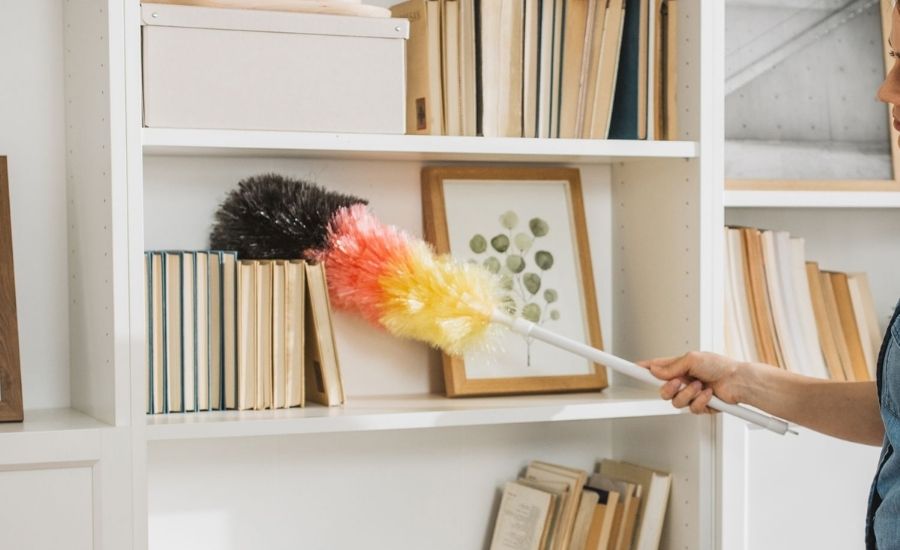
Dust that seems to reappear right after cleaning is a common frustration in many homes. While it’s easy to assume the problem is dirty floors or open windows, the real cause is often the way air moves through your HVAC system. Your furnace and ductwork constantly circulate air throughout the house, and if filtration or airflow isn’t working properly, that system can end up spreading dust instead of removing it. Understanding how your furnace and airflow interact with dust is the first step to figuring out why your house is always dusty and why a dusty home can feel impossible to keep clean.
Why Is My House So Dusty
If your house is always dusty even after you clean, the problem usually isn’t cleaning, it’s how dust is moving through the home.
Dust isn’t just dirt from outside. It’s a mix of skin cells, fabric fibers, pet dander, outdoor pollen and soil, insulation particles, and microscopic debris circulating through the air. Carpets, upholstery, bedding, and even clothing act like dust reservoirs that slowly release fibers and particles back into circulation inside a dusty house.
Cleaning removes dust that has already settled, but much of the dust in a home hasn’t landed yet. In many cases, a very dusty house has a large amount of dust constantly floating in the air. Every time your HVAC system runs, doors open, or someone walks across the floor, tiny particles become airborne again.
The key issue is air circulation. Every time your HVAC system turns on, air moves through the house and can lift settled dust back into the air. If filtration or the duct system isn’t doing its job well, that dust simply keeps recirculating through the home.
Another common issue is hidden dust sources like attic leaks, crawlspaces, or poorly sealed ducts, which can continuously introduce fine particles into the airflow without you realizing it.
So when dust comes back quickly, it usually means your home has an ongoing source of airborne particles and that air movement inside the home is stronger than the filtration removing it, a common reason people end up dealing with a dusty house.
Why Your House Is Always Dusty
Dust returns quickly because most household dust is airborne before it lands on surfaces, and a typical house creates new dust every minute of the day.
Think of your home like a slow-moving air loop. Your HVAC system pulls air into the return ducts, conditions it, and sends it back through supply vents. As air moves through the house, particles get lifted from floors, furniture, fabrics, and flooring, then travel through the duct system. Some particles get caught in the filter, while others settle somewhere else in the house.
A surprising amount of dust is produced indoors from normal living. Fabric fibers shed from clothing, bedding, and upholstery, while people and pets release skin cells, hair, and dander. Walking across carpet or flooring can release tiny particles, and opening doors or windows brings in outdoor dust and debris.
Your HVAC system then moves this air throughout the house as part of the normal airflow cycle.
If filtration is weak, airflow is uneven, or duct sealing isn’t optimal, the system won’t capture enough of those particles before they settle again. Dust simply keeps circulating through the air and landing on surfaces, which is why many homeowners feel like their house is always dusty, even after regular cleaning.
How HVAC Problems Create a Very Dusty House
Your HVAC system moves thousands of cubic feet of air every hour. If something in that system isn’t working correctly, it can actually spread dust instead of removing it. In homes where HVAC issues exist, the system can turn a normal home into a very dusty house.
An HVAC system can unintentionally act like a giant air mixer, constantly stirring up particles and redistributing them through supply vents instead of fully removing them.
Poor filtration is one of the most common causes. Cheap or clogged filters allow fine particles to pass through and circulate. When airflow is strong but filtration is weak, dust gets mixed and spread through the house instead of being captured.
Leaky return ducts can also introduce dust. If return ducts have gaps, they can pull dusty air from attics, crawlspaces, basements, or wall cavities into the system. Those hidden spaces often contain insulation fibers, construction dust, and debris that then spread throughout the house and contribute to a dusty home.
Pressure imbalance can make the problem worse. If the system pulls more air through return ducts than the house naturally provides, it may draw air from those hidden areas.
Airflow problems inside the home can contribute as well. Rooms with weak or unbalanced airflow collect dust faster because particles settle instead of being filtered out. Dust buildup inside duct interiors can also gradually release particles back into living spaces.
When these HVAC issues occur, the system essentially becomes a distribution system for dust instead of a filtration system, which is why some homes feel like a very dusty house all the time.
Why Your Air Filter Makes Your House Is Always Dusty
The air filter is one of the most common reasons a house is always dusty. However, it’s not always for the reason people think.
If the filter is too cheap, too clogged, or the wrong size, it may fail to capture fine particles like pollen, dander, and small debris. Basic fiberglass filters mainly protect the HVAC equipment. They capture large debris but allow fine dust to pass through.
Clogged filters can also create problems. When a filter becomes packed with dust, airflow drops and the system may begin pulling air through small gaps around the filter instead of through it, allowing dust to bypass filtration entirely.
In many cases, the biggest issue isn’t just filter quality but air bypass. If the filter slot doesn’t seal tightly, air will take the path of least resistance and flow around the filter instead of through it. When that happens, even a high-quality filter can’t stop dust from circulating inside a dusty house.
Another common issue is choosing a filter that’s too restrictive for the system. If airflow drops too much, the system may pull unfiltered air through gaps in the ductwork.
The goal isn’t simply installing the strongest filter, but using the right filter that the system can push air through efficiently. Replacing filters regularly and choosing a moderate MERV-rated filter designed for your system can significantly help reduce dust in house environments.
How Leaky Ducts Create a Dusty Home
Leaky ductwork can act like a vacuum pulling dust into your HVAC system in a way most homeowners never notice.
Return ducts are especially important because they pull air from rooms back to the furnace or air handler. If those ducts have gaps or cracks, they can also pull in air from spaces that were never meant to be part of the airflow system, such as attics, crawlspaces, wall cavities, basements, or utility chases.
These areas often contain insulation fibers, construction debris, wood dust, drywall particles, outdoor contaminants, and other fine dust. Once that air enters the system, it becomes part of the indoor air supply and gets distributed throughout the house, turning a normal home into a dusty home.
Ventilation problems can also contribute. Poor airflow allows dust to settle heavily in certain areas, while negative pressure can cause the home to pull in outside air through small structural gaps. That incoming air often carries additional dust and pollen indoors.
Sealing ducts and improving airflow often dramatically reduce dust in house environments and help prevent a dusty home from forming.
How to Reduce Dust in House
A few HVAC maintenance steps can noticeably reduce dust in house conditions in most homes. Reducing dust is less about cleaning more and more about controlling where air comes from and how it moves.
Start with the basics. Replace air filters regularly, most homes need a new filter every 1-3 months. Dirty filters reduce airflow and filtration efficiency, and the filter should also fit tightly so small gaps don’t allow unfiltered air through.
It’s also important to have ducts inspected for leaks and seal return duct leaks, which prevents dusty attic or crawlspace air from entering the system. Cleaning supply and return vents can help as well, since dust buildup near vents can get pulled back into circulation.
Airflow throughout the home should remain balanced. When airflow is uneven, dust tends to settle heavily in certain areas. Keeping the blower and coil clean is also important, since dust buildup inside the air handler can reintroduce particles into the airflow.
Scheduling annual HVAC maintenance or furnace service allows technicians to check airflow, blower components, and overall system cleanliness. Maintaining indoor humidity around 40-50% also helps, because very dry air allows dust to stay airborne longer.
These steps address the source and movement of dust, not just the symptoms, and often make a bigger difference than cleaning alone when trying to reduce dust in house conditions.
Does an Air Purifier for Dusty House Actually Help
An air purifier for dusty house environments can help, especially in homes with pets, allergies, or heavy dust. High-quality purifiers use HEPA filters, which capture extremely small particles like pollen, dander, and fine dust.
Portable purifiers work well at removing particles already in the room. They’re especially effective for bedrooms or spaces where people spend a lot of time.
However, an air purifier for dusty house situations works best when it’s treated as a supplement, not the main solution. If the HVAC system has filtration issues, leaky ducts, airflow problems, filtration gaps, or pressure imbalances, dust will continue entering the home faster than a purifier can remove it.
In those cases, even the best air purifier for dusty house conditions is essentially treating the symptom rather than the source.
The most effective approach is improving the system that moves air through the home. That includes proper HVAC filtration, sealed ductwork, and balanced airflow. Using an air purifier for dusty house rooms like bedrooms can then help remove the remaining airborne particles.
Together, this combination helps reduce dust in house environments and significantly improves indoor air quality.
Simple Trick to Eliminate Dust in Your House
A simple but effective trick is to run the HVAC fan in “circulate” or continuous mode for part of the day. Most thermostats allow the fan to run independently from heating or cooling.
When the fan runs regularly, it continuously pulls air through the filter. This helps capture airborne dust before it has time to settle on surfaces, which can make a noticeable difference in a dusty house.
Air passes through the filter more often, floating dust particles are captured sooner, and dust is less likely to settle on surfaces.
Many modern thermostats include a circulate mode, which runs the fan periodically throughout the day. Even running the fan for 30-60 minutes each hour can improve filtration and reduce visible dust. This simple change can significantly reduce visible dust, especially in homes where a dusty house problem keeps returning.
Just make sure your air filter is clean and properly fitted, or the system may circulate dust instead of removing it.
When a House Is Extremely Dusty and Needs HVAC Repair
Not always, but excessive dust can be a warning sign that something in the HVAC system isn’t working properly.
If a house is extremely dusty, it may indicate deeper airflow or filtration problems in the HVAC system. You may need HVAC service or air conditioner repair if you notice dust buildup shortly after cleaning, dust blowing from vents, uneven airflow between rooms, persistent allergy symptoms indoors, or high dust levels even with frequent filter changes.
These symptoms can indicate issues like leaky ductwork, poor filtration, dirty blower components, or airflow imbalance.
When a house is extremely dusty, the problem often comes from how air is entering and moving through the system. The HVAC system may be pulling dusty air from unsealed ductwork, circulating particles through inadequate filtration, or struggling with clogged internal components.
In many cases, the solution isn’t major repair but diagnosing how air is entering and moving through the system.
A professional HVAC inspection can identify whether the issue is related to duct leaks, filtration, airflow balance, or equipment performance and determine whether the solution is simple maintenance, duct sealing, or system repair for a house is extremely dusty situation.


