
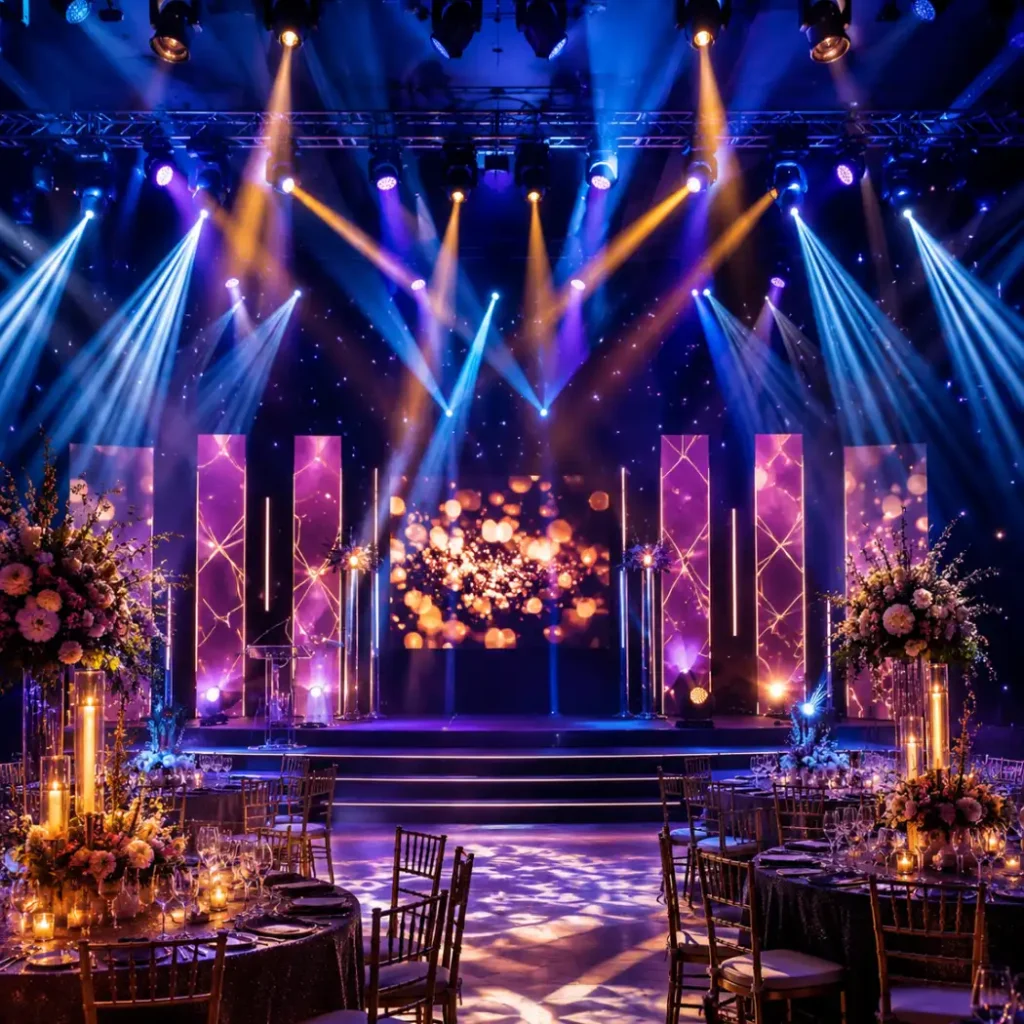
Lighting can completely change the atmosphere of an event. A wedding venue can feel warm and romantic, a concert stage can become energetic and dramatic, and a party can instantly become more exciting with the right combination of colors and movement. This is why professional stage lighting has become an important part of weddings, parties, concerts, clubs, theaters, and other entertainment events.
Modern lighting equipment offers much more than simple illumination. Fixtures can change colors, move across a stage, create patterns, highlight performers, and help create different moods throughout an event.
Why Stage Lighting Matters
Good stage lighting has two main purposes: visibility and atmosphere. Performers need enough light to be seen clearly, while event organizers want the venue to look attractive and memorable.
For weddings, lighting can emphasize the couple, wedding stage, entrance, or dance floor. At concerts and entertainment events, it can support the performance by changing colors and movements in response to the music.
Lighting is also important for photography and video. Well-positioned fixtures can add depth to a scene and make backgrounds more visually interesting without relying entirely on decorative elements.
Popular Types of Stage Lights
There are several types of professional lighting fixtures, and each has a different role.
Moving head lights are among the most flexible options. They can pan and tilt while changing colors and effects, making them suitable for dynamic events and performances.
A beam light produces a narrow, concentrated beam that can create striking aerial effects, especially when haze or fog is used.
Spotlights are useful when a specific performer, area, or feature needs to be emphasized.
Wash lights provide broader illumination and are useful for coloring stages, walls, backdrops, and dance floors. They help create an overall visual atmosphere rather than focusing attention on one small area.
Moving Head Lighting for Dynamic Events
For concerts, DJs, parties, and large wedding receptions, movement can make lighting much more engaging. A moving head lamp can direct light across different areas of a venue without requiring someone to physically reposition the fixture.
During a wedding, the lighting can remain soft and elegant during dinner and speeches, then become more colorful and energetic when guests move onto the dance floor. At a concert or DJ event, movement can be synchronized with music to create a more exciting performance environment.
The flexibility of moving head fixtures also makes them useful for venues that host different types of events. Instead of installing a completely different lighting arrangement for every occasion, operators can program fixtures for different scenes and requirements.
The Role of Wash Lights
Not every lighting effect needs to be dramatic. Sometimes the most important part of a lighting design is creating a smooth layer of color across the venue.
This is where wash lights are particularly useful. They can illuminate a large section of a stage, wedding backdrop, wall, or dance floor with relatively even color. Different colors can also be used to create different moods.
For example, warm tones can create an elegant and romantic wedding atmosphere, while blue, purple, or other saturated colors can work well for parties, clubs, and entertainment shows.
Wash lighting can also complement moving heads, beams, and spotlights. While other fixtures create focused effects, wash lights help prevent the overall venue from appearing dark or visually flat.
Lighting for Weddings
Wedding lighting requires a different approach from a high-energy concert. The goal is usually to create an elegant environment while still providing enough flexibility for different parts of the celebration.
Soft wash lighting can enhance the wedding stage and backdrop, while moving fixtures can introduce subtle movement during the reception. Lighting can also be adjusted as the event progresses—from warm and understated during dinner to brighter and more colorful during dancing.
Another advantage of programmable lighting is that different scenes can be prepared in advance. This allows the lighting operator to quickly change the atmosphere for the entrance, speeches, cake cutting, first dance, and other important moments.
Lighting for Parties and Entertainment
Parties and entertainment events generally provide more freedom to experiment with color and movement. DJs and event planners can combine moving heads, beams, wash lights, strobes, and other effects to create a more energetic environment.
However, more lighting does not necessarily mean better lighting. A balanced setup is usually more effective than filling a venue with random effects. Wash fixtures can provide the background color, moving heads can add motion, and beams or spotlights can provide sharper visual accents.
The result is a lighting design that feels coordinated rather than overwhelming.
Choosing the Right Stage Lighting
When selecting lighting equipment, consider the size and type of venue first. A small wedding hall may need fewer fixtures with wide coverage, while a concert or large entertainment venue may require more powerful equipment.
Other factors to consider include:
- Light output and coverage
- Beam angle
- Color mixing capabilities
- Pan and tilt movement
- DMX or other control options
- Indoor or outdoor suitability
- Power consumption
- Fixture size and weight
- Reliability and after-sales support
It is also useful to choose equipment from an established lighting manufacturer. XMLITE, for example, offers moving head lights, wash lights, beam lights, par lights, spotlights, and outdoor stage lighting for applications including wedding halls, theaters, concerts, clubs, and events. The company states that it has operated since 2010 and provides a three-year warranty on its products.
Creating Better Events Through Lighting
Professional stage lighting is not simply about making a venue brighter. It is about controlling attention, creating atmosphere, and supporting the experience of the people attending the event.
For weddings, the right combination can make important moments feel more intimate and memorable. For parties and concerts, movement and color can increase energy and excitement. For theaters and live performances, carefully positioned lights can help guide the audience’s attention toward the action on stage.
As lighting technology continues to develop, modern fixtures are becoming more versatile and easier to integrate into professional lighting systems. Choosing the right combination of moving, focused, and wide-area fixtures can therefore make a significant difference to the final appearance of an event.
If you’re planning a wedding, party, concert, or entertainment setup, exploring different stage lighting options can help you create a lighting design that matches both the venue and the mood you want to achieve.


