

Introduction
Growing tea has been a cherished activity for ages, supporting millions of people and producing a popular beverage that is consumed all over the world. However, increased temperatures, erratic weather patterns, and rising energy prices have made cultivation more challenging than ever in recent years, posing an increasing threat to tea growers. It is not as easy as it used to be to produce high-quality tea.
Here comes the idea of “Solar Panel Tea Farms,” a sustainable invention that blends the generation of solar energy with the growth of tea. This technique, often referred to as agrivoltaics, entails setting up solar panels inside tea plants. In addition to producing clean electricity, the panels partially shade the crops, shielding the tea plants from intense heat but letting them get the sunshine they require to develop tasty leaves.
We will look at how agrivoltaics is changing tea farming in this guide. You will find scientific studies, expert views, and real-world examples demonstrating the efficacy of this strategy. Along with the main advantages and difficulties, we will also go over doable procedures for incorporating solar panels into conventional tea production. This peek into the future of tea farming is fascinating and educational, regardless of whether you are a farmer, a sustainability enthusiast, or just a tea lover.
What exactly is the Solar Panel TEAS Passage?
What is the Solar Panel TEAS Passage, then? It is, in essence, a section of the TEAS exam that covers solar panels—their significance, history, and real-world applications, particularly with regard to the White House. Your reading, comprehension, and interpretation skills on solar energy and its significance in American history are tested in this text.
You may ask, why solar panels?As a clean and renewable substitute for conventional energy sources, solar energy has emerged as a major force in the battle against climate change. The history of solar panel use at the White House is highlighted in the TEAS section, which also demonstrates how various presidents have tackled energy policy throughout time.
Despite its briefness, this chapter is jam-packed with knowledge. It pushes students to comprehend not just the advantages solar energy has for the environment but also the historical and political factors that have influenced its uptake in the United States.
Key Benefits of Solar Panels in Tea Farming
Microclimate Regulation: By providing some shade, solar panels assist tea plants stay cool and retain soil moisture.Research indicates that agrivoltaic systems can drastically lower water evaporation, with Concentrated-lighting Agrivoltaic Systems (CAS) reducing it by up to 21% and Even-lighting Agrivoltaic Systems (EAS) reducing it by up to 33%. Under CAS, evaporation from pan surfaces decreases by 14%, while under EAS, it decreases by 19%.This water-saving impact, which lessens the need for irrigation and encourages more sustainable farming methods, is particularly beneficial in regions that are prone to drought.
Energy Independence: By producing clean electricity, solar panels can reduce dependency on fossil fuels by powering facilities for processing, storage, and irrigation. In addition to meeting energy demands, agrivoltaic systems increase farm productivity and resilience.
Economic Gains: By selling excess solar energy to the grid or utilizing it for their own activities, farmers can generate additional revenue. Solar-equipped tea fields in Assam, India, have found that this energy source generates vital income in the early years when newly planted tea plants are not yet fruitful.
Support for Biodiversity: By promoting pollinators and preserving soil health, the shaded areas beneath solar panels produce a more balanced ecosystem. Additionally, vertical solar panels can serve as windbreaks, protecting crops from damaging winds.
History of Solar Panels on the White House
In order to understand how attitudes toward renewable energy are changing in the US, let us look back at the White House’s solar panel history.It all started in 1979 when 32 solar panels were erected to heat water by President Jimmy Carter, who was a strong advocate for sustainable energy. This action demonstrated the potential of solar technology and encouraged energy saving in a symbolic and useful way.
The story changed in 1986.The removal of the panels was ordered by President Ronald Reagan, who had less enthusiasm for solar electricity. This was viewed by many as a blow to the country’s aspirations to use renewable energy.
However, the panels were not completely retired; instead, they were moved to Unity College in Maine, where they continued to fulfill a useful function.
New solar panels were placed at the White House in 2002, signaling a new era as sustainability gained renewed attention. These panels’ journeys show how political objectives and environmental understanding have changed over time, highlighting more than just technological improvement.
Real-World Applications and Case Studies
Case Study: Japanese Tea Plantations Using Solar Power
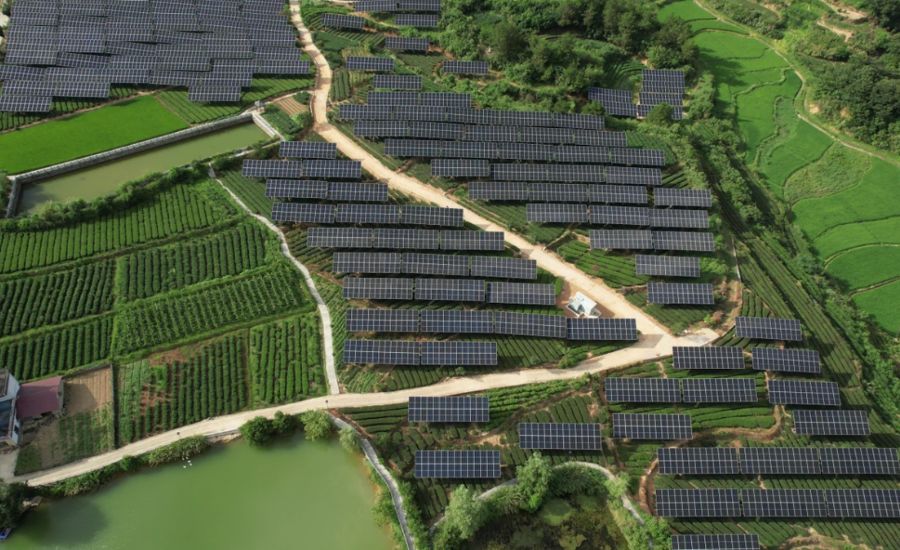
In Japan, areas like Shizuoka and Kagoshima are setting the standard for integrating solar power with tea production. Japan’s Ministry of Agriculture, Forestry, and Fisheries (MAFF) recognized TEA ENERGY Corporation as a model of best practice for their successful integration of solar panels into tea fields.In addition to improving crop quality, their strategy has drawn attention from throughout the world for advancing the Sustainable Development Goals (SDGs).
Case Study: Solar-Powered Tea Factories in Kenya
High electricity costs have been a problem for Kenya, a major producer of tea, leading industries to look into renewable energy sources. Multiple tea plants will have solar panels installed thanks to a partnership between the Kenya Tea Development Agency (KTDA) and solar energy companies.
In May 2023, for instance, a 275-kilowatt rooftop solar system was installed at the Gachege Tea Factory in Gatundu. By reducing electricity costs by half, this installation saved about KSH 7.8 million (about $60,000 USD) a year.Furthermore, the project contributes to environmental sustainability by lowering carbon emissions by roughly 320 tonnes annually.
A 1,300-kilowatt-hour solar system was also installed by the Kipkebe Tea Factory in Nyamira County, which distributed 650 kilowatt-hours across its Kipkebe and Keritor facilities. In 2022, this strategy saved about 9.6 million shillings between September and December.As a sign of its dedication to sustainability and climate change mitigation, the firm plans to obtain 30% of its energy from solar.
Case Study: Agrivoltaic Tea Plantations in India
In order to address energy costs and environmental issues, tea farms in Assam, India, are implementing solar electricity. For example, the Kalinagar Tea Estate spent approximately ₹40 lakh on a 100-kilowatt peak (kWp) solar plant, which produced yearly savings of roughly ₹8 lakh, half from the production of energy and half from the use of less diesel. This change has resulted in a 30–40% reduction in diesel use and a notable decrease in carbon emissions.
Similarly, to ensure a consistent energy supply and lower CO2 emissions, the Rosekandy Tea Estate erected an interactive grid rooftop photovoltaic system. Given the energy-intensive nature of tea processing (about 0.94 units of electricity per kilogram of tea), these solar projects have a significant positive impact on the economy and the environment.
Professional Views: How Solar Energy Affects Tea Production
The potential of renewable energy in the tea business is highlighted by experts.According to a feasibility study done in Bengal and Assam, tea gardens only absorb around 13.61 kg of CO₂ per hectare, whereas tea factories release about 3,292 kg of CO₂ per tonne of tea produced. This stark disparity emphasizes how urgently sustainable energy sources like solar power must take the place of non-renewable energy.
The largest tea estate in Asia, Chengmari Tea Estate, now has a 1,040 kW bifacial solar system installed by Tata Power Renewable Energy Limited (TPREL), which spearheaded this endeavor. By producing around 1.5 million units of power per year, this initiative is anticipated to lower the estate’s carbon footprint by 29,420 tons of CO₂, which is the same as planting 47,000 teak trees.
The Current Solar Panels on the White House
A renewed emphasis on sustainable electricity was seen in 2013 when President Barack Obama brought solar energy back to the White House. The West Wing and colonnades of the estate now house an astonishing 980 solar panel installations. About 20% of the White House’s energy needs are met by the 320 kilowatts of power produced by these panels.
In addition to saving money, this installation makes a strong statement about the country’s dedication to renewable energy.The panels, which were constructed by SunPower, are designed to endure the harsh weather in Washington, D.C., proving the robustness and dependability of contemporary solar technology. Their operation and upkeep are supervised by the National Park Service, which guarantees optimal system functioning.
Overcoming Challenges in Solar Panel Teas Passage
1. Expensive upfront expenses
The significant initial outlay needed for solar installations is one of the main challenges. These expenses may be unaffordable for small-scale tea growers. For instance, GRIPS Energy worked with the Igara Growers Tea Factory in Uganda to fund, construct, and currently manage the solar system. Farmers may take advantage of solar energy without bearing the entire financial load thanks to this cooperative strategy.
2. Careful Design Specifications
Carefully placing solar panels is necessary to guarantee that tea plants continue to receive the sunlight they require. Panels are positioned to offer partial shade without completely blocking the sun since tea plantations require a certain type of sunlight to thrive. Energy production and ideal crop development are balanced in this thoughtful design.
3. Continuous Upkeep
To be effective, solar panels need to be maintained on a regular basis, especially in places where there is dust, pollen, or other debris. In response to growing irrigation energy demands in Kenya, Menengai Farmers Ltd. teamed up with REDAVIA, which offered a solar solution in addition to ongoing maintenance.This allowed farmers to concentrate on farming while guaranteeing a steady supply of energy.
4. Conflicts Over Land Use
Land use disputes can occasionally arise from the installation of solar panels on farms. Local farmers in Nandgaon, India, opposed Tata Power’s solar project because they thought it would disrupt their agricultural lives. These problems show how crucial it is to have clear policies and involve the community in agrivoltaic project implementation.
5. Financial and Regulatory Obstacles
Agrivoltaic projects frequently face financial and legal challenges. Dual-use applications are restricted in many places because land is solely designated for commercial or agricultural uses. Furthermore, some farmers are reluctant to embrace relatively new and unproven technologies because the commercial potential of these systems is still being investigated.
Solar Panel TEAS Passage – Final Note
To sum up, the Solar Panel TEAS Passage provides an introduction to the fascinating field of solar energy, not just another test part. It emphasizes everything from its technical developments and historical turning points to its expanding importance in constructing a sustainable future.
This essay tries to shed light on the amazing potential of solar energy and its significance in our daily lives, regardless of whether you’re a student preparing for the TEAS exam or are just curious about the effects of solar technology.
Facts:
- Agrivoltaics in Tea Farming
- Solar panels are integrated into tea plantations, providing partial shade while generating clean energy.
- Shading reduces heat stress and conserves soil moisture. CAS reduces evaporation by up to 21% and EAS by up to 33%.
- Solar panels are integrated into tea plantations, providing partial shade while generating clean energy.
- Energy and Economic Benefits
- Solar panels supply electricity for irrigation, processing, and storage, reducing dependence on fossil fuels.
- Excess solar energy can be sold to the grid, providing farmers with additional revenue.
- Example: Assam tea gardens use solar energy for income during early years when tea plants are not yet productive.
- Solar panels supply electricity for irrigation, processing, and storage, reducing dependence on fossil fuels.
- Biodiversity and Environmental Support
- Shaded areas under solar panels promote pollinators and reduce soil degradation.
- Vertical panels act as windbreaks, protecting crops from wind damage.
- Shaded areas under solar panels promote pollinators and reduce soil degradation.
- White House Solar Panel History
- 1979: President Jimmy Carter installed 32 solar panels for water heating.
- 1986: President Ronald Reagan removed the panels.
- 2002: New panels installed to renew commitment to sustainability.
- 2013: President Barack Obama installed 980 panels producing ~320 kW, covering 20% of the White House’s energy needs.
- 1979: President Jimmy Carter installed 32 solar panels for water heating.
- Global Case Studies
- Japan: TEA ENERGY Corporation integrates solar panels in tea farms, recognized by the Ministry of Agriculture.
- Kenya: KTDA installs solar systems in Gachege (275 kW) and Kipkebe (1,300 kWh) factories, reducing electricity bills and CO₂ emissions.
- India: Kalinagar Tea Estate (100 kWp) and Rosekandy Tea Estate installed solar plants, saving energy costs, reducing diesel consumption, and lowering CO₂ emissions.
- Japan: TEA ENERGY Corporation integrates solar panels in tea farms, recognized by the Ministry of Agriculture.
- Challenges of Agrivoltaic Systems
- High initial installation costs; financing models like GRIPS Energy in Uganda help alleviate this.
- Proper panel design needed to balance shading and sunlight.
- Regular maintenance required to ensure efficiency.
- Potential land-use conflicts; community engagement is essential.
- Regulatory and financial barriers in some regions limit adoption.
- High initial installation costs; financing models like GRIPS Energy in Uganda help alleviate this.
Summary:
Solar Panel Tea Farms represent a groundbreaking approach to sustainable tea cultivation. By integrating solar panels into plantations (agrivoltaics), farmers gain multiple benefits:
- Environmental: Reduced water evaporation, lower CO₂ emissions, improved biodiversity.
- Economic: Reduced energy costs, additional revenue from solar power, long-term savings.
- Agricultural: Optimal microclimate for tea plants, protection from extreme weather.
Globally, countries like Japan, Kenya, and India are successfully adopting solar-powered tea production, demonstrating that clean energy and traditional agriculture can coexist. The White House’s solar panel history illustrates political and historical shifts in renewable energy adoption. Despite the clear advantages, agrivoltaic systems face challenges such as high costs, maintenance, land-use conflicts, and regulatory hurdles.
The Solar Panel TEAS Passage in exams is designed to test comprehension of solar energy, its history, and real-world applications, highlighting the growing significance of renewables in shaping sustainable practices.
FAQs:
Q1: What is the Solar Panel TEAS Passage?
A1: It’s a section of the TEAS exam that focuses on solar panels, covering their history, usage, and significance, particularly in the context of the White House and renewable energy.
Q2: How do solar panels benefit tea farming?
A2: They provide partial shading to reduce heat stress, conserve water, supply electricity for farm operations, generate extra revenue, and support biodiversity.
Q3: What is agrivoltaics?
A3: Agrivoltaics is the integration of solar panels into agricultural fields, allowing simultaneous food or crop production and renewable energy generation.
Q4: Which countries are leading in solar-powered tea farms?
A4: Japan, Kenya, and India have implemented successful solar-powered tea plantations and factories.
Q5: What are the main challenges of solar-powered tea farming?
A5: High upfront costs, careful panel design, maintenance requirements, land-use conflicts, and regulatory or financial barriers.
Q6: How has solar energy been used at the White House?
A6: Solar panels were first installed by President Carter in 1979, removed by Reagan in 1986, reinstalled in 2002, and expanded under Obama in 2013 with 980 panels generating 320 kW.
Q7: Are solar panels cost-effective for tea farmers?
A7: Yes, while the initial investment is high, savings on electricity, reduced diesel consumption, and potential revenue from selling excess energy can make it financially beneficial.
Read More About Business , technology At slightwave